
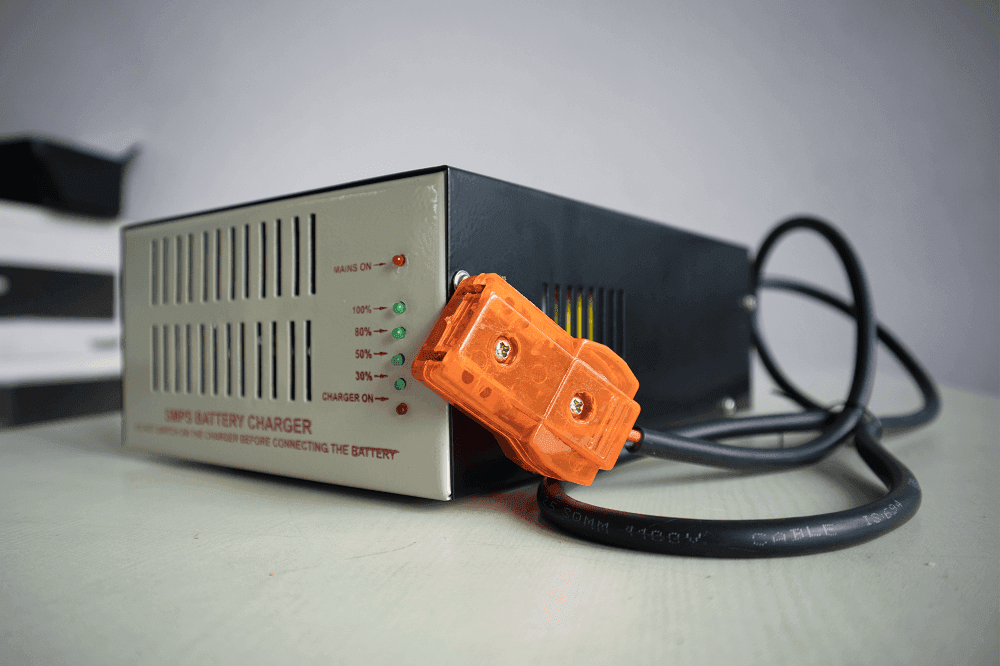
You probably see e-rickshaws every day. Chances are you ride them too. The next time you get in one, ask the driver about their charging routine. Sooner or later, you will run into at least one of them complaining about voltage trouble. One evening the charger does what it should. The next evening, it takes forever to charge the vehicle or stops responding entirely. What these people do not realise is that it has nothing to do with the e-rickshaw battery charger in India. The problem stems from something far less tangible: voltage fluctuation.
Drivers or vehicle owners rarely think about this issue until they run into problems. In reality, the charger that occupies a corner of a garage has to withstand more instability than most folks imagine.
Why Voltage Fluctuation is a Common Phenomenon in India
The power grid of the subcontinent operates under a massive range of conditions. These include dense city networks, overstretched rural power lines, and so much more. In smaller towns, the mains often drop well below the usual 230V. In fact, it can go as low as 90V. That too during peak load hours. Combine it with sudden surges, and you get nothing more than instability. A plugged-in e-rickshaw charger has to deal with this instability every night. It is not an occasional inconvenience but a daily reality.
What Happens Inside the Charger When Voltage Drops
A basic charger designed for a narrow input range cannot handle voltages outside its comfort zone. When this happens, it undercharges the battery or overheats it internally. In the worst-case scenario, the e-rickshaw charger suffers permanent circuit damage. Here is an overview of what happens inside the unit when the power supply becomes inconsistent.
Uneven Current Flow
If the mains voltage drops, it will result in an unsteady current, disrupting the charge cycle. When that happens, the e-rickshaw will end up with undercharged batteries, even if it is left connected to the charger overnight.
More Stress on Internal Components
Whenever the voltage fluctuates, it places additional strain on internal components, such as rectifiers and transformers. If it goes on like this for months, the stress significantly shortens the charger’s lifespan.
Charge Cycle Inconsistencies
An e-rickshaw battery responds best to steady charging patterns. If the input is disrupted due to fluctuations, it will reduce the battery’s capacity over time. The driver or owner will not even notice until things get out of hand.
Overheating from Voltage Spikes
Unexpected power surges force the charger to compensate quickly. This rapid adjustment will generate a lot of extra heat, which, in turn, might be the reason for the charger’s unexpected failure.
Key Takeaway
No one can control voltage fluctuations, but the charger can absorb them and fail as a result. The best solution is to use a charger with a wide-input voltage tolerance and proper microcontroller-based regulation. Only such a charger will work even if the mains supply does not cooperate. In other words, e-rickshaw drivers and owners need to choose the right charger. It is not about faster charging but protecting the charger and battery from conditions that are commonplace with India’s electricity supply.
Electro Service India can offer such a toto battery charger. We are all about precision-based power. We have been in the field of industrial battery charging since 1987, offering float, traction, SMPS, and Li-ion solutions for steel plants, substations, and mobility from Kolkata across the country. Request a quote today.