
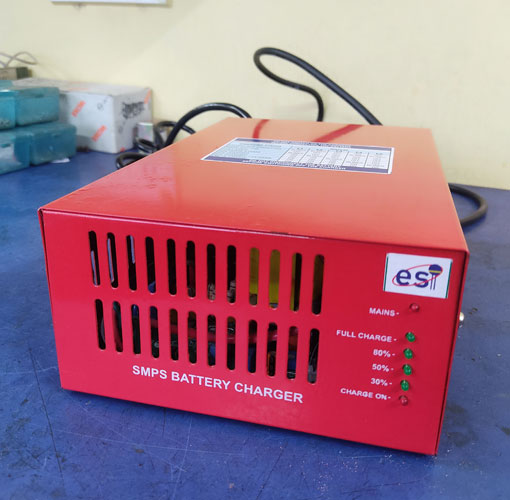
In India’s fast-evolving industrial landscape, efficiency and reliability define success. Every power system, whether in a factory, substation, or telecom network, depends on steady energy to keep operations running.
Traditional chargers no longer meet today’s performance and safety needs. This is where the SMPS battery charger in India transforms the way industries manage power. With compact designs, faster charging capabilities, and intelligent protection features, SMPS (Switched Mode Power Supply) chargers have become an indispensable part of the power infrastructure.
From railways to process industries, they ensure uninterrupted energy, making them the preferred solution for diverse applications.
What Makes SMPS Battery Chargers So Essential for Modern Power Systems?
SMPS battery chargers differ from conventional chargers in design and performance. Instead of relying on heavy transformers, they use high-frequency semiconductor switching technology, allowing superior voltage regulation and faster response times.
These features make them ideal for industries requiring consistent and efficient power. The chargers provide:
- High energy conversion efficiency of up to 90%.
- Compact and lightweight construction for easy installation.
- Quick charging cycles without overheating.
- Inbuilt protection against overload and short circuits.
How Do SMPS Battery Chargers Improve Reliability Across Key Sectors?
India’s industrial and infrastructure sectors rely on a stable energy supply. SMPS chargers meet this need effectively across various domains, such as:
- Railway signalling and telecom systems: Ensure smooth communication and safety during operations.
- Substation and DG set batteries: Maintain power continuity during outages or system fluctuations.
- Power generating plants: Support critical backup systems during high-demand cycles.
- Material handling equipment: Power forklifts, platform trucks, and stackers for long, efficient usage.
Why Are Industries Shifting from Conventional Chargers to SMPS Technology?
The shift towards SMPS technology continues to gain momentum across the country. Businesses prefer them for their space efficiency, performance, and smart controls. According to Electronics for You, India’s power electronics market is expected to grow at a CAGR of 8.2% between 2023 and 2030, largely driven by this adoption trend.
Industries choose SMPS chargers because they:
- Operate efficiently under fluctuating voltages.
- Offer automatic shutdown on fault detection.
- Require minimal maintenance and space.
- Provide higher longevity for connected batteries.
What Role Do SMPS Chargers Play in Sustainability and Energy Efficiency?
Sustainability remains a growing priority in industries. SMPS battery chargers support this goal by optimising power consumption and minimising energy wastage.
Their efficient operation also lowers heat generation and carbon emissions. By ensuring higher performance with lower input energy, they help industries cut long-term electricity costs while aligning with national energy-saving initiatives.
How Are Manufacturers Enhancing SMPS Charger Designs?
Manufacturers constantly innovate to meet industrial demands. They now design SMPS chargers with advanced features like:
- Microcontroller-based controls for better voltage accuracy.
- Modular and rack-mounted systems for easy maintenance.
- Wide input voltage ranges for fluctuating Indian grids.
- Customised outputs for telecom, power plants, and railway sectors.
The rise of SMPS technology marks a major shift in how industries manage power. Investing in an SMPS battery charger in India means preparing for a smarter, more energy-conscious future. For those looking to upgrade their industrial power systems, Electro Service India (ESI Electro) offers a range of advanced SMPS battery chargers designed for consistent performance and long-term reliability. Learn more or connect with our experts today.